Spatial Interfaces
With the rise of AR/VR headsets, UI is moving from 2D screens to 3D space. Spatial design focuses on depth, scale, and interaction in a 360-degree environment.
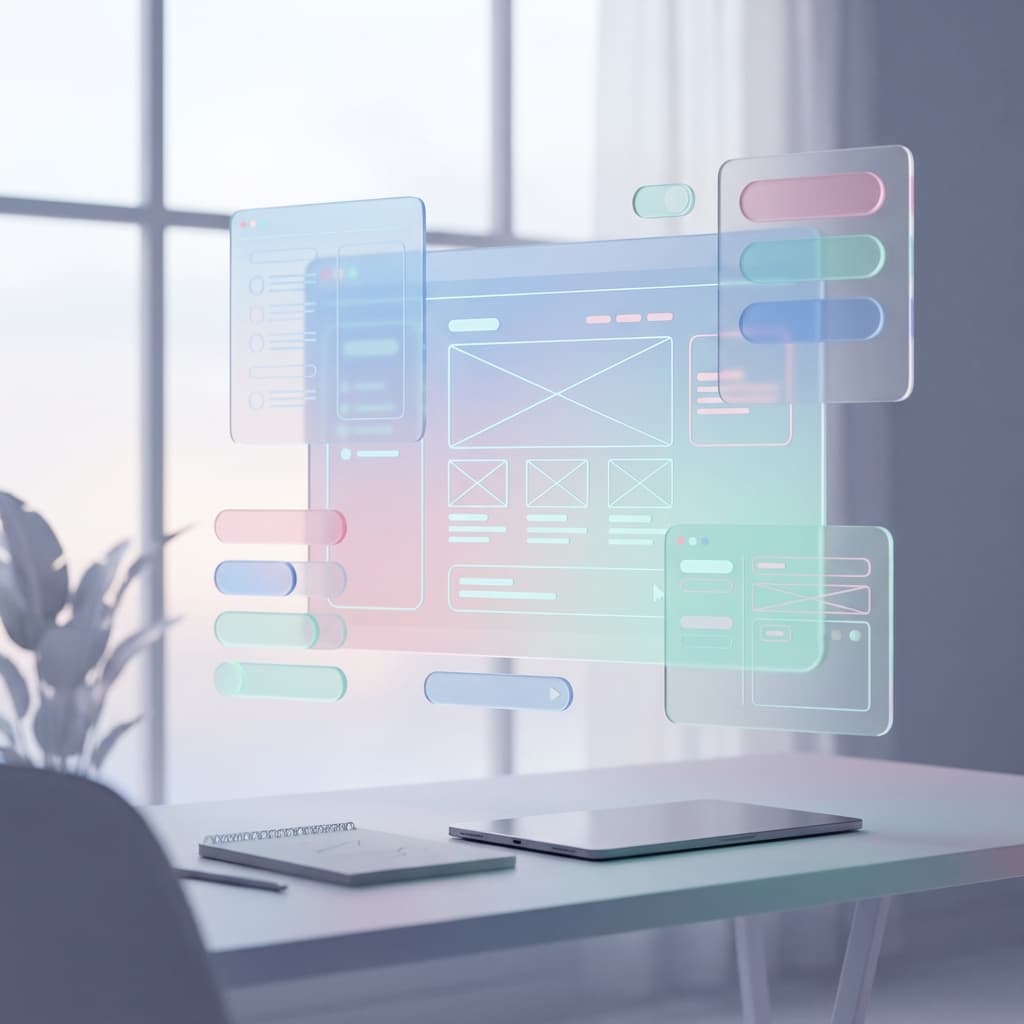
Neo-Glassmorphism
Glassmorphism has evolved. It's now more subtle, using blur and transparency to create hierarchy and focus without sacrificing readability.
Micro-Interactions
It's the little things that matter. Tiny, delightful animations when hovering or clicking make interfaces feel alive and responsive.
Adaptive Design
Interfaces are becoming context-aware, adapting not just to screen size, but to user behavior, lighting conditions, and even accessibility needs automatically.
Share this insight